 CBR17bingo O
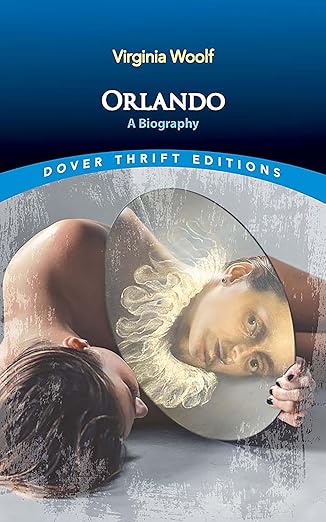
I’ve wanted to read Orlando for some time. I knew it was a time travel novel about a character, Orlando, who not only lives for centuries but also changes gender. It was made into a movie starring Tilda Swinton back in the ‘90s, but I never saw it. Apparently, the movie is more “inspired by” the novel than a direct adaptation of it, which, having now read the book, makes sense. Not gonna lie, the novel, published in 1928, is unusual, and I’m not sure I fully understood it. Impressively, it presents viewpoints on gender, literature, history and women’s place in it all that I think would have been quite progressive for the time and that probably shock people still.
The full title of the novel is Orlando A Biography, and it is written as if the biographer is speaking directly to the reader, making asides along the way. Orlando when we first meet him is a teen of a noble and wealthy family. He is raised to follow in his ancestors’ footsteps, training for battle and learning the classics. He also is an aspiring poet, constantly working on plays and a poem about an oak tree on his family’s estate. Orlando is a physically beautiful young man who makes quite an impression on Queen Elizabeth I and many other women. Orlando has access to everything one could desire — wealth, power, beauty — but when he is betrayed by those whom he loved and trusted most, he has a strong physical reaction linked to radical changes in the timeline. Orlando eventually ends up serving as an Ambassador in Constantinople during a time of political upheaval, and it is at this moment in history that he becomes she.
Orlando’s change in gender seems not to shock her, although it does lead to some legal trouble in England, where law suits challenge Orlando’s right to inherit. As a woman, Orlando experiences the 18th, 19th and early 20th centuries, occasionally meeting people who have also changed sex and whom she knew earlier in life as a man. The people who knew Orlando before the gender change still recognize that this is Orlando, and no one seems upset by the change. Some see it as quite natural in fact. Orlando likes her new body but she does notice, especially once she gets to the 19th century (Victorian England) that being a woman feels more constricted and women are not meant to be accepted as “thinkers” the way men are. One of my favorite passages occurs when Orlando re-meets a literary critic whom she had known centuries before as a man. I think Woolf must have relished an opportunity to send up the fickleness of critics while also recognizing that they can make or break a new writer’s career.
Woolf’s writing is astounding. Her prose is full of long, flowing, descriptive passages — about nature, about art, about humanity, about sexuality — that often read like poetry. When she writes about Orlando’s struggle throughout time to write what he/she feels, and to write it well, to be satisfied with it and reach people with it, I imagine Woolf is revealing what she and many other writers must have experienced in producing their art. The story of Orlando is the story of being a writer, or of trying to become a writer, and of the pain and loneliness that can accompany it. When Orlando was a young man, being a writer was considered inappropriate for men of his rank. Orlando as a woman is lumped in with all women and considered incapable of the deep thinking required of being a writer. Throughout time Orlando struggles with feelings of isolation and loneliness, which might be a reflection of Woolf’s own personal struggles with depression and possibly bi-polar disorder.
Orlando is not a long novel, but it is dense, and I feel as if I am only understanding part (the most obvious part) of what Woolf was trying to say with it. It was a challenging read but absolutely worthwhile.