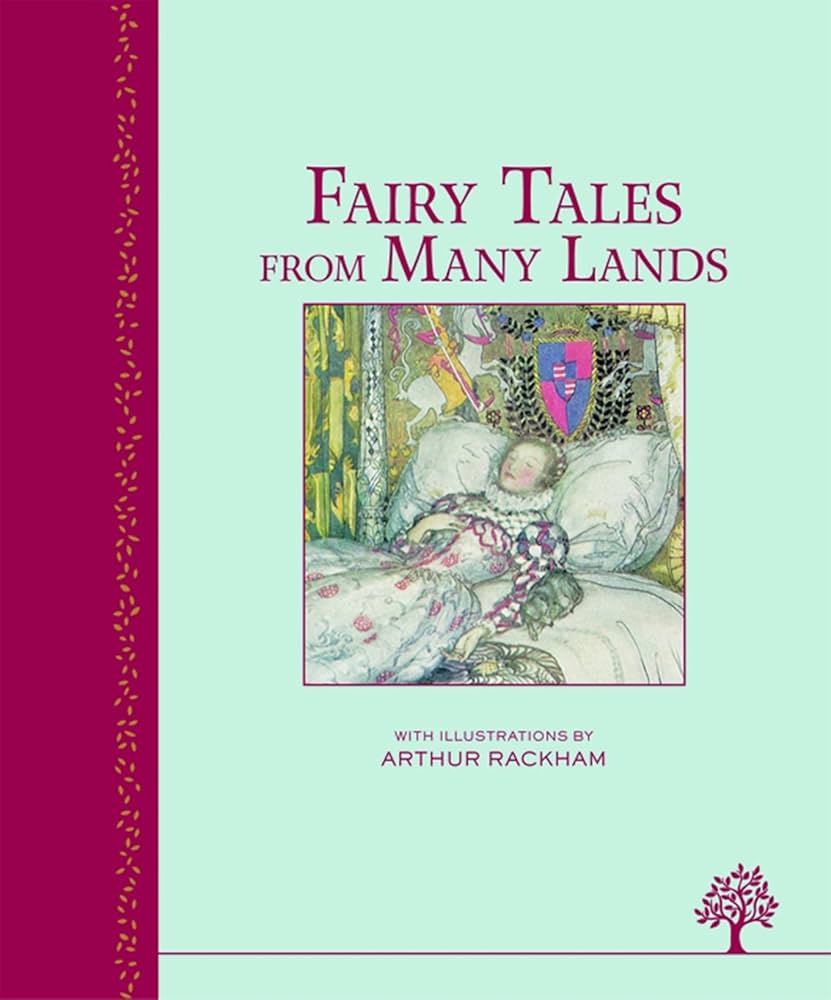
As the titles says, this book contains assorted stories from several countries; eleven in fact. Each country gets one story, except for Japan which gets three. They are:
England: Jack the Giant-Killer. The reasonably well known “killed three with one blow: story that even Mickey Mouse covered, only a little bloodier.
Scotland: The Battle of the Birds. Which you would think would be about a fight between birds, but it’s a rather strange tale about a king’s son and the adventures he has finding, losing, and regaining a wife.
Both of these stories are written in a very stilted and archaic style, closer to Middle English than Modern English.
Wales: Lludd and Llevelys. The story of Beli the Great’s sons and their settling of Great Britain. This was a very interesting take on how several places in Great Britain got the names they have,
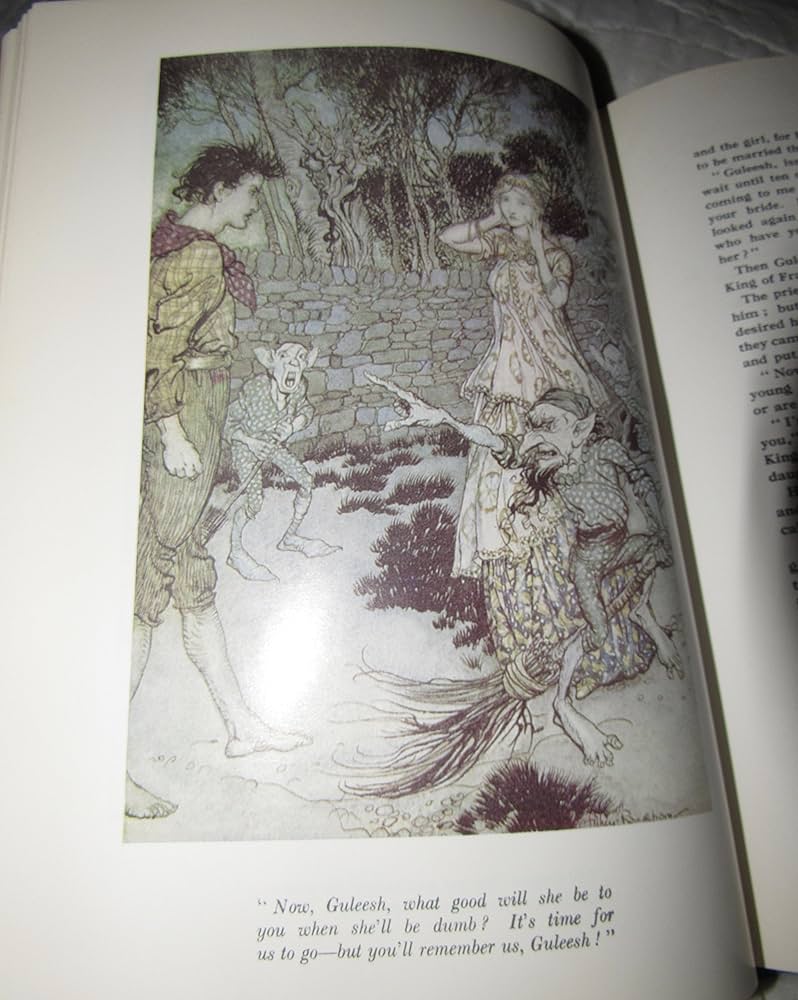
Ireland: Guleesh. How Guleesh follows the fairy host to France and comes back with the woman who will become his wife. This is the second book I’ve read this story in, and I love that neither book tells the story the exact same way.
France: The Sleeping Beauty. Probably the third version I’ve ever read of it; Disney’s it isn’t. You have to love Sleeping Beauty with a side of attempted cannibalism.
Italy:Cesarino and the Dragon. How a young man, aided by his pet wolf, bear and tiger, kills a dragon, marries a princess, and prunes his family tree.
Portugal: What Came of Picking Flowers. The perils and joys of flower picking. Pros: you can wind up rich or happily married. Cons: you can wind up kidnapped and possibly stuck with an old ogre.
Japan: The Adventures of Little Peachling. Momotaro and his happy, simple life that also happens to involve the acquiring of riches for his millworker parents. This was a version I had never read before.
The Fox’s Wedding. A very short story about the prosperous life of a white fox by the name of Fukuyemon.
The Tongue-Cut Sparrow. Story with the moral that being nice and asking for nothing in return will always wind up with you being rewarded.
Russia: Morozko, also known as Father Frost. Hansel and Gretel, if instead of just abandoning them in the woods, the stepmother decided to attempt to murder them by marrying them off to Father Winter. Then when they survive, trying to marry her daughters off. Moral of the story is: lying will always go better for you than telling the truth. (This is the country of my paternal ancestors; boy, are they a hardy yet dismal bunch.)

Serbia: The Golden Apple Tree and the Nine Peahens. The story of a king’s son and how trying to find out why peahens are eating his father’s apples resulted in him gaining a horse and a wife. I had read another version of this story in another book that had a completely different tale after the discovery of the peahens in the apple tree. I guess that goes to show that certain tales are standard in various countries; or maybe that each country takes a tale and alters it to fit the mores of the inhabitants.
Belgium: The Last Adventure of Thyl Ulenspiegel. A story about how both love and the Spirit of Flanders will never die, no matter what happens. This was probably the most religion-influenced story in the book.
All these stories are for children, as long as you accept that children will not be unnerved by blood and murder, which they won’t be; children probably get creeped out by those things far less than adults do. I found it nice that most of the stories are ones you won’t see in most books.
And as usual the illustrations by Arthur Rackham add to the book. I have made a habit of collecting books with his illustrations in them; this, Alice in Wonderland, The Romance of King Arthur. He was most known for his illustrations for Rip van Winkle and Peter Pan in Kensington Gardens. He is widely regarded as one of the leading illustrators from the ‘Golden Age’ of British book illustration which roughly encompassed the years from 1890 until the end of the First World War.
The one thing I will ding this book for, and it’s just a matter of personal taste, is that it has an attached ribbon bookmark. For some unknown reason, I loathe those things with a fiery passion; I’m always fighting the urge to take a pair of scissors to them. It doesn’t impact on the contents, though.