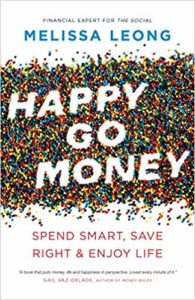
I won this book at a brunch that I was dragged to by a friend and, quite frankly, was a bit petulant about attending in the first place (first thing on a Sunday morning I just wanted breakfast and gossip, not a lecture on my poor spending habits). Out of these inauspicious beginnings, I was pleasantly surprised and had to begrudgingly backtrack on my bad attitude- the brunch, and this book, were both great.
If Leong looks or sounds at all familiar, you might be Canadian- she is a reporter for the Financial Post, a section of the more right-wing of Canada’s two national daily newspapers, the National Post. I knew her vaguely from The Social, Canada’s version of The View, where she often appears as a guest, providing financial insight and advice. Although I knew of Leong, I was not really familiar with the substance of her advice (I work during the day, so I’m not the target audience for The Social) and I didn’t have many expectations for this book (although I do love the cover- sprinkles! It just looks so cheery).
Despite or because of my low expectations, I was very pleasantly surprised- Happy Go Money is a non-judgmental, practical but also emotionally/socially attuned guide to thinking about and being better with your money. Leong starts off with the softer side of money/ wealth, and our relationship to it. I hadn’t given a lot of thought to how my parents talked about or treated money, and when I did stop to think about it I realized that a lot of what I do is less of a conscious decision and more because that’s the way I was raised (which is true of a lot of relationships…). From the ‘softer’ relationship aspects (ie: additional chapters on self worth and a more holistic view of ‘wealth’), Leong moves into some of the ‘harder’ and more standard financial advice topics (investments, compound interest, debt), and finishes up with charitable giving. Each chapter provides background to the topic at hand, often including scientific studies or pop culture references, a personal story or anecdote relevant to Leong’s own money journey, and then questions and challenges for readers.
I found this book really inspiring and have been thinking about it- and tackling its questions and challenges – since I read it. I actually sat down and did a retroactive budget of where my money is going and it was almost like getting the results of a personality test (where do I spend my dolla dolla bills when no one is watching? Spoiler, its meals out, snacks and cosmetics, none of which I really need more of…). I also drafted this budget from a different ideological starting point than the other budgets I’ve attempted and abandoned- instead of thinking ‘where can I squeeze more money out’, I was thinking, ‘does what I’m spending my money on fit with my values?’. This meant I had little shame or remorse when I was looking at my ‘Entertainment’ and ‘Travel’ spends- these things are important to me, and the money I spent there does accord with my values. Reading the book/ doing the budget has also impacted my spending of money going forward- I’m thinking about values as I spend. Dinner out with friends I don’t see often? Well worth the spend. Wednesday takeout with the boyfriend because we’re feeling lazy? It feels less special, and less worth the spend.