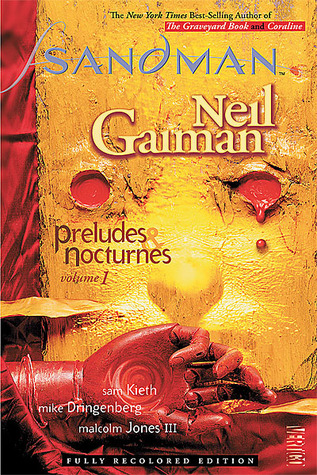
This is one of those books that come heavy with the weight of other people’s expectations. I genuinely had almost no idea what it was about, only that the people who love it LOVE IT, and I had a general idea that it was pretty weird. The only thing I knew for sure was that Death was a character, because Gaiman spun her off into her own comic at one point. I added it to my TBR when it became apparent that I would probably like it if I tried it, and then promptly did not read it for almost ten years. It probably would have been even longer if the lovely faintingviolet hadn’t gifted me a copy in our annual Cannonball Read Book Exchange a couple years back. And since one of my resolutions in 2018 was to read my backlog of CBR Book Exchange gifts, this went on the list for December (I of course vastly overestimated the amount of books I could read during the holidays, so I ended up having to move it to January, and here we are.)
I don’t think I want to talk very much about the actual plot or characters, because I had such a good time going in blind, but I do want to talk about the kind of book it is, which is indeed very weird, but weird with a purpose. It’s not the darkest comic I’ve ever read, but it’s not lighthearted fare either. Like a lot of Gaiman’s work, there’s a focus on folklore and mythology coming to life in the “real world,” there’s storytelling and dreaming as central thematic concerns, there’s mixing and matching of genres and forms, and a hodge podge of different characters and stories from all kinds of different places. It’s also pretty creepy, but not without hope.
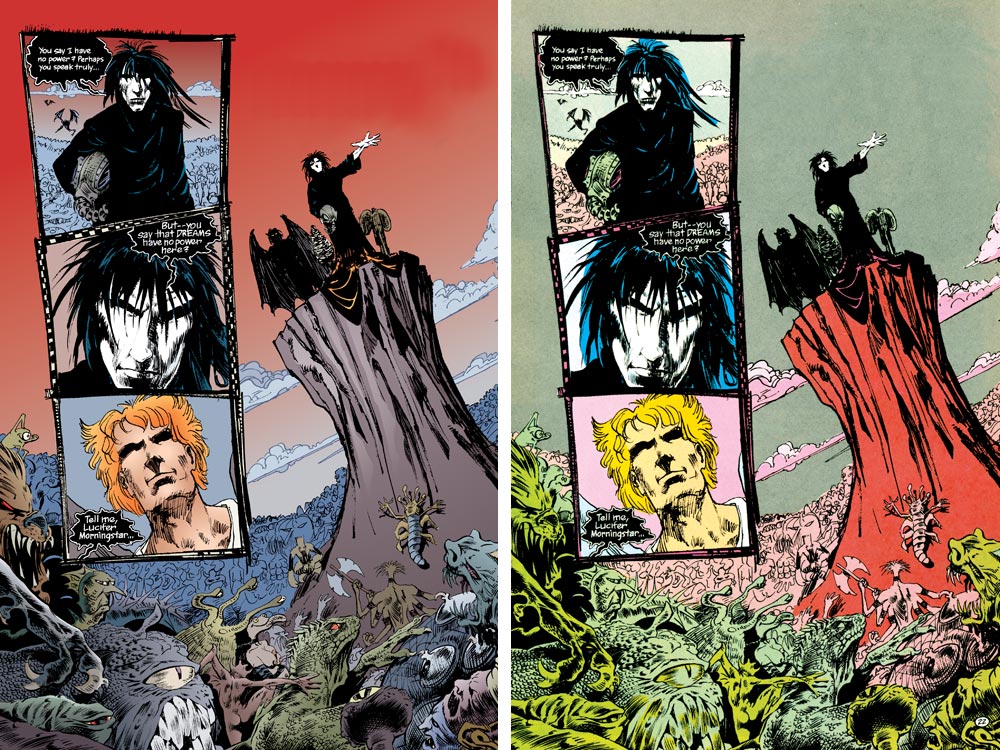
I read the newer editions that have been recolored since their original publication in 1989. (See above, the right panel is from the original 1989 edition, the left from the recolored one released in 2012.) There’s a certain nostalgic charm to the original; it’s very late 1980s, early 1990s, and reminded me strongly of other comics I’ve read from that time period (mainly Watchmen and The Dark Knight Returns). There’s nothing wrong with it. I just find the recolored editions to be smoother, easier on the eyes, and there’s a clarity there that wasn’t before (see the bottom left corner of this panel).
My edition also came with a foreword by the comic’s editor, but ultimately I wish I hadn’t read it. The gist of that three page intro was basically: this first volume is good, but its author was still working out the bugs and hadn’t found his voice yet. If I hadn’t read that, I would have had no idea. I just generally don’t think it’s a great idea to tell a potentially brand new reader to lower their expectations? I don’t know, maybe I’m wrong on that and that only made me want to like it more. In general, I don’t think it’s a good idea to interpret a piece of art for a new reader, who is a blank slate coming in. I just had this happen to me in one of my status updates over on Goodreads. I’m reading It (I like it so far!), and when I commented upon the rampant homophobia in the 1980s, this guy decided to mansplain to me the theme of Sexuality In His Favorite Book It. It was incredibly irritating, and killed that blank slate feeling for me, where you get to discover the book and its themes for yourself, and create the meaning in your own mind.
Anyway, all this to say, I will definitely be continuing this series, sometime in the next couple of months. They’re all actually on Kindle Unlimited right now, but I don’t know if that’s the best way to go. I feel like for this series, I need to have the hard copies, large and in my face.
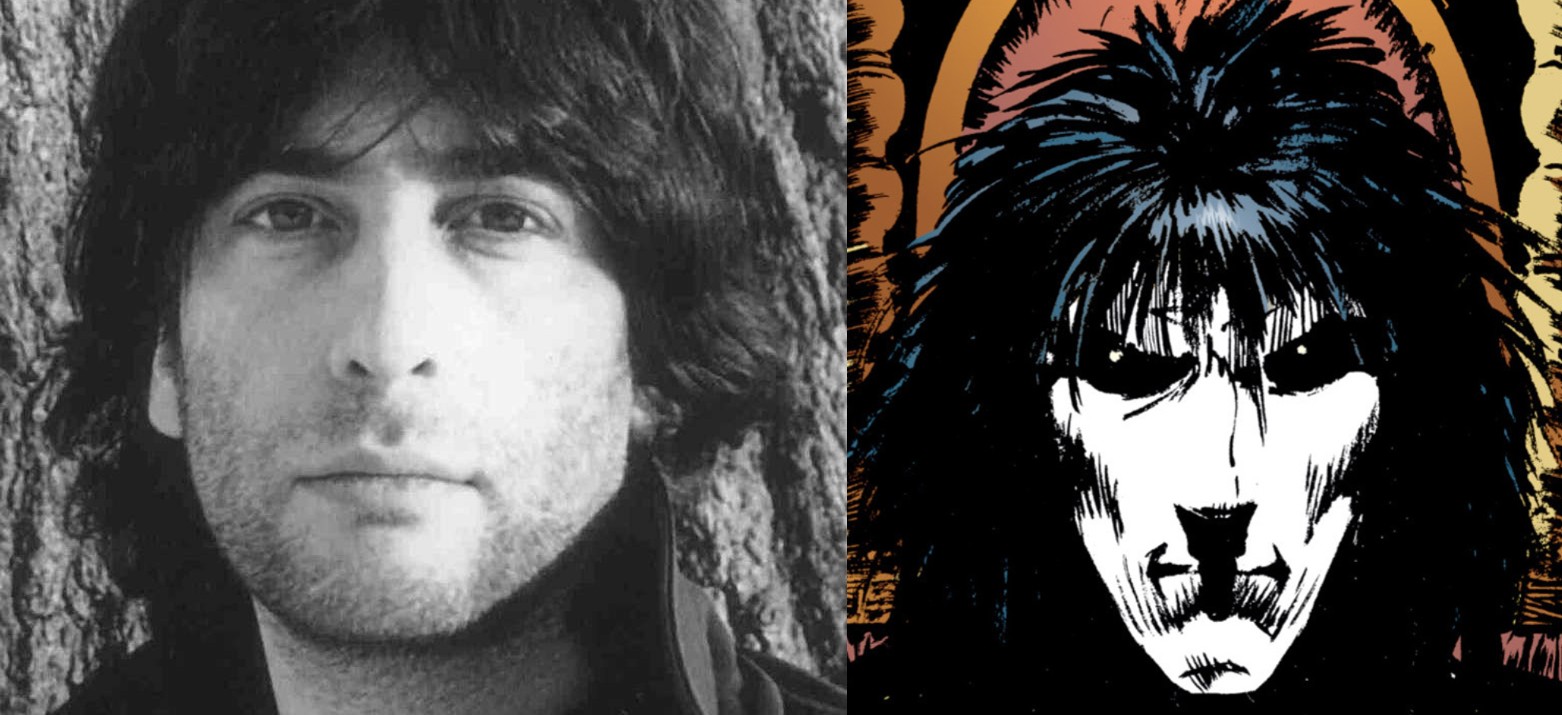
As a last aside, apparently I am not the only person who independently fixated on the uncanny resemblance between Neil Gaiman and his protagonist while reading. I’ll just leave this HERE.